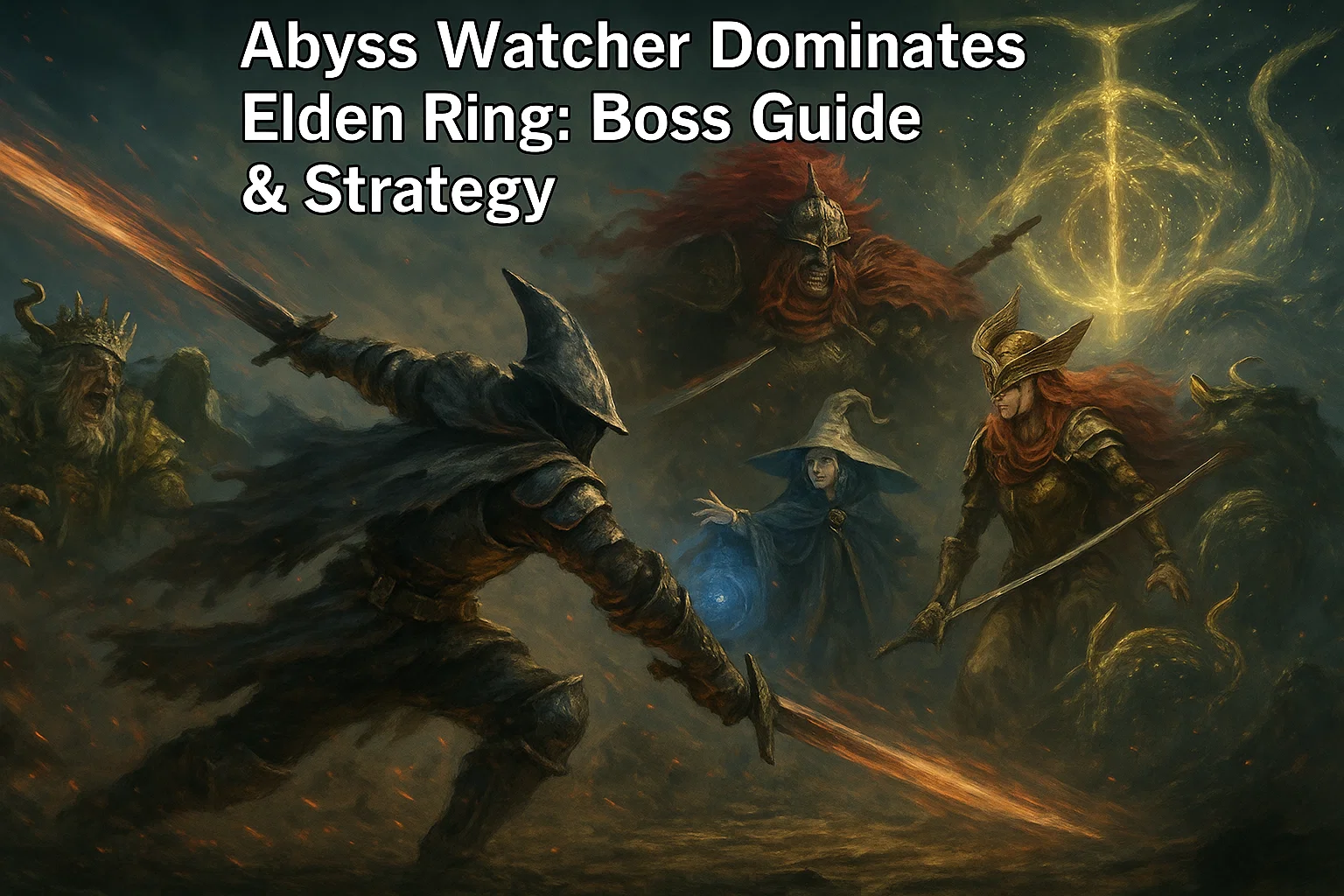
If you’ve been around Soulsborne games for a while, you know the Abyss Watcher from Dark Souls III isn’t exactly the type of boss you’d imagine carving a path through Elden Ring. But after watching this run, I have to admit: the speed, rhythm, and sheer aggression of the Abyss Watcher kit make it surprisingly effective across almost every major fight in the game. The transcript basically shows an uninterrupted demolition derby from Margit all the way to the Elden Beast, and there’s a lot we can actually learn from this—especially when it comes to timing, movement, and pressure strategies in Elden Ring.
The fun part is that this isn’t just a one-off challenge video. The run kind of illustrates a mini–case study on how Elden Ring’s bosses interact with fast, relentless melee styles. If you’ve ever played an ultra-light build, a dex bleed build, or anything that relies on burst windows and perfect spacing, there’s plenty here that translates directly to regular gameplay.
Below is a breakdown of what this run shows us, why certain bosses crumble under sustained pressure, and some practical takeaways if you’re looking to optimize your own melee playthrough.
Speed Wins the Early Game
The first few bosses—Margit, Godrick, and Rennala—basically evaporate the moment the Abyss Watcher closes distance. Margit goes down in under five seconds, and that alone highlights something every new player should understand early on: Elden Ring bosses don’t handle sustained stagger pressure very well.
If you’re building a fast setup, consider the following:
- Use jumping attacks early and often
- Stay in close quarters unless a boss has a wide AOE
- Abuse stagger windows aggressively
During my own runs, there were moments where I was tempted to take the slow-and-safe route. But consistently, aggression pays off—as long as your stamina management is clean enough to avoid panic rolls.
While you’re still getting used to early-game scaling, some players also look for small boosts to keep momentum going. For those experimenting with different builds, I’ve seen players occasionally buy elden ring runes for quick leveling when they’re stuck on early bosses. As long as it doesn’t replace natural game learning, it can help push new playstyles into viability sooner.
Bosses Weak to Constant Pressure
Godrick, Radahn, Goldfrey, and Morgott all share one pattern: the moment you stop giving them breathing room, their movesets start falling apart. The Abyss Watcher’s run practically turns them into training dummies.
The biggest takeaway here is that bosses with slower wind-ups or long recovery frames are extremely vulnerable to:
- Sprint-in punish timing
- Off-axis roll attacks
- Multi-hit strings that interrupt pre-animation frames
For example, Radahn never even lands his meteor slam in this run because the Watcher refuses to back off. That’s something regular players can do as well: don’t retreat unless you absolutely need to reset spacing. If you keep a boss reacting instead of acting, you win by momentum alone.
The First Real Wall: Fire Giant and Godskin Duo
This run finally slows down around Fire Giant—at least compared to the previous fights. Fast builds usually have to pick their angles carefully here, and the Watcher does exactly that: always targeting the ankles, never letting the giant reset distance, and avoiding the fireburst radius by pre-positioning rather than reaction.
This is where the transcript gives one of the most practical lessons:
- Pre-movement matters more than reaction speed.
- Big bosses telegraph their next zones long before the animations fire.
Then we have the Godskin Duo, which most players dread no matter their build. The Watcher’s solution is simple but effective: hit both bosses at once. If your weapon has wide sweeps, you can trigger huge stagger and damage efficiency.
Players who struggle with this fight sometimes try to brute-force it with damage boosts, better upgrades, or higher stat budgets. I’ve seen console players, especially those on PS5, reach out to vendors to buy elden ring runes ps5 when they want to push through this specific difficulty spike. Totally optional, but understandable—this fight punishes under-leveled builds harder than almost any other.
High-Speed Builds vs. Melania
Most players know Melania is the “mobility check” of Elden Ring. You don’t beat her by simply hitting harder—you beat her by dodging her consistently. And here’s where the Abyss Watcher looks almost tailor-made for this encounter. Mobility lets you:
- Sidestep Waterfowl Dance more reliably
- Punish her recovery instead of her startup
- Avoid unnecessary trades that heal her
The run does get tight during the phase-two scarlet vortex, which is totally normal. Even a flawless player can get clipped by her delayed animations. But the important part is that recovery discipline wins this fight, not mindless aggression.
The Final Stretch: Radagon and Elden Beast
Radagon is the first time in this run where the Abyss Watcher almost gets blown up early. Fast builds need to remember that Radagon loves punishing roll timing. The player survives because they maintain mid-range spacing until Radagon overcommits. If you stay too close, his grab chains can delete you instantly.
Elden Beast, on the other hand, is a classic anti-melee boss—lots of running, lots of repositioning, barely any consistent openings. Yet even here, the Watcher’s stagger pressure eventually wins out.
One notable lesson:
Patience beats frustration. Always chase smart, not fast.
Even without ranged tools, the run shows that good spacing and selective aggression can overcome this fight without needing to chase every tiny opening.
A Quick Note on Resource Boosting
Throughout the video, you can tell the build is highly optimized. That’s part of the fun of challenge runs like this—they showcase what the game looks like when you push a playstyle to its absolute limit. For players who want to experiment with unusual builds, or fast-track late-game metas, some communities use third-party stores like U4GM for rune bundles or gear. Completely optional, obviously, and not required for enjoying the game, but it’s a common tool for players who want to test specific setups without grinding multiple playthroughs.
This Abyss Watcher run is fun to watch, but it’s also surprisingly educational. The whole thing demonstrates why fast, relentless melee builds work so well in Elden Ring: the bosses simply can’t keep up when you control the spacing, punish recovery, and stay glued to them during their slowest transitions.
Whether you’re a veteran or a newer player still finding your preferred fighting rhythm, there’s a lot here you can adapt into your normal play. Speed, discipline, and consistent pressure go a long way—sometimes much farther than raw damage alone.
Just In: Game mechanics and Weapons changes for Elden Ring DLC